You can’t fix what you don’t see
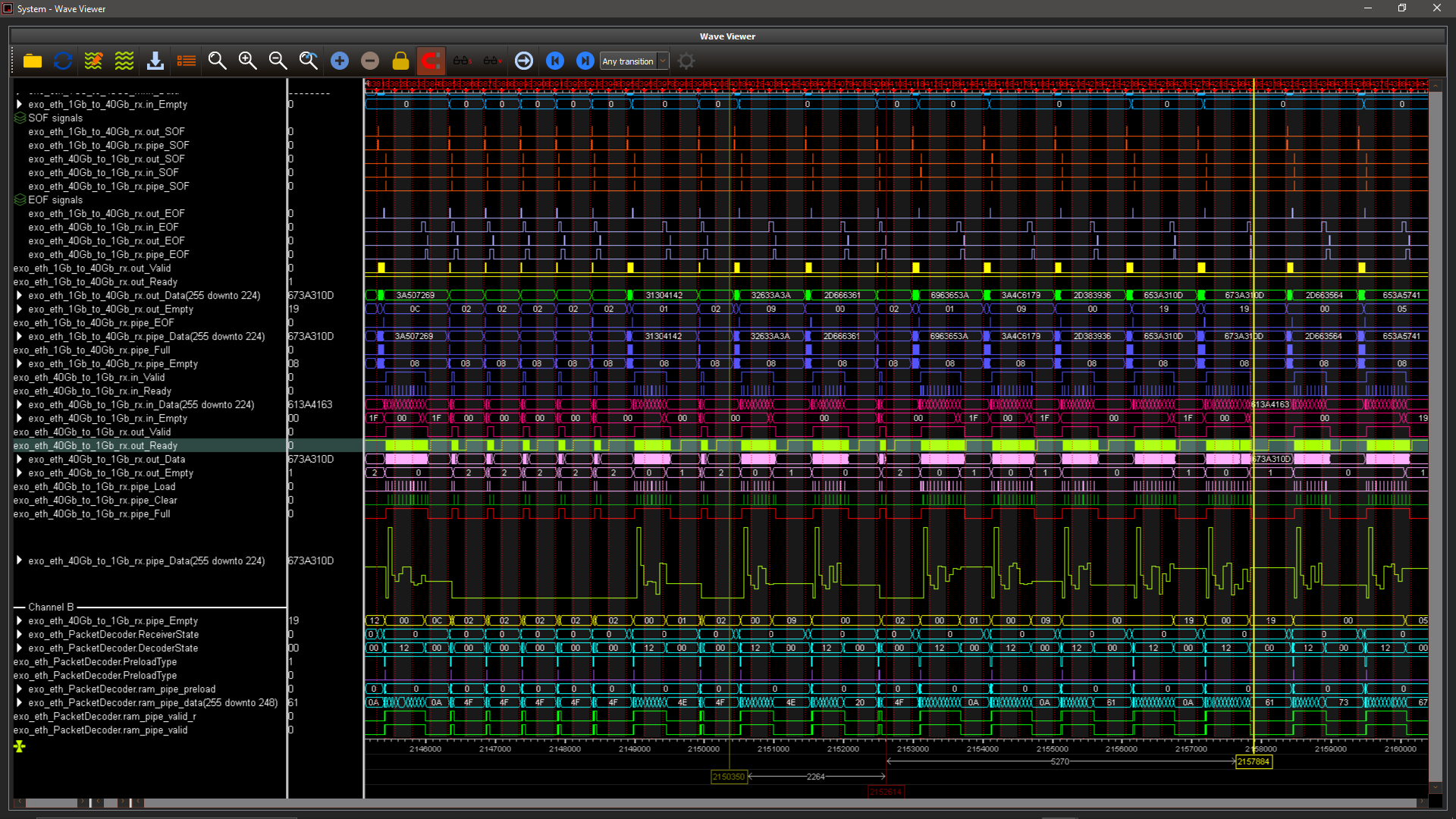
Capture terabytes of FPGA data
Find bugs in minutes, not weeks

Is it for me?
Typical usages :
- Simulation is insufficient for the system complexity
- Long times in operation must be observed
- At speed validation is required
- Regulations require real-world tests
- FPGA prototyping boards lack tools and emulation is out of question ($, speed)

How does it work?
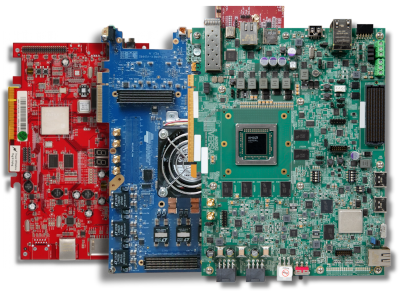
Our our tools leverage FPGA logic and transceiver resources associated with powerful external hardware to capture massive data from single or multi-FPGA boards.
Exostiv Labs tools…
- Scale with the target platform complexity
- Are FPGA plaftorm-independent
- Operate at speed over realistic nr of cyles


What we do
🧠 Core idea: “visibility inside FPGAs”
Modern chips—especially FPGAs (Field-Programmable Gate Arrays) and SoCs (System-on-Chips)—are extremely complex.
Debugging them is hard because:
- Simulations don’t always reflect real-world behavior
- Internal signals are often invisible during runtime
- Bugs can appear only under real operating conditions
👉 Exostiv Labs solves this by giving engineers deep, real-time visibility into internal chip activity.
🛠️ What our products actually do
Our tools (like Exostiv Probe and Exostiv Blade):
- Capture massive amounts of internal data from chips while they run at full speed
- Monitor thousands to millions of internal signals simultaneously
- Let engineers analyze behavior during execution
- Work across single or multiple FPGA systems
💡Think of it like: ‘A high-speed black box recorder + microscope for chips.’
⚙️ How it’s used (practical use cases)
1. Chip validation (pre-silicon)
On pre-silicon prototypes, Exostiv Labs helps verify:
- Does the design behave correctly?
- Are there hidden edge-case bugs?
- Does software run properly on the chip I am building?
2. Debugging complex systems
When something breaks:
- Engineers can inspect internal signals at runtime
- Identify issues that simulations missed
- Explore FPGA behaviour that simulations cannot reach
3. Performance testing
Analyze real-world scenarios:
- Validate performance under real workloads
- Analyze interactions between IP blocks
- Explore corner cases
🧑💼 Who uses them
- Semiconductor companies (fabless and IDMs)
- OEMs building complex electronic systems
🚀 Why it matters
- Real-world validation → Not just simulations
- Faster debugging → Reduces development time
- Fewer bugs in production → Better product quality
“We significantly shorten time-to-market for
advanced chips and
FPGA-based systems.